If you have been asked for an occupational therapy home assessment, an assistive technology assessment, or a home and living assessment, it helps to know what the assessment involves. At Steps2Life, our occupational therapists assess living spaces, recommend suitable equipment, and provide supporting documentation where required. This guide explains what these assessments can include, what the written report may cover, and how to enquire at our clinics in Parramatta, Bankstown (Regents Park) and Penrith (Kingswood).
Steps2Life is a registered NDIS provider. Our occupational therapists see children and adults. A written report can be used to describe support needs and to inform NDIS planning or a plan review. We do not promise a particular plan outcome, and a report does not guarantee that the NDIA will fund recommended equipment or home modifications.
What is an OT home assessment?
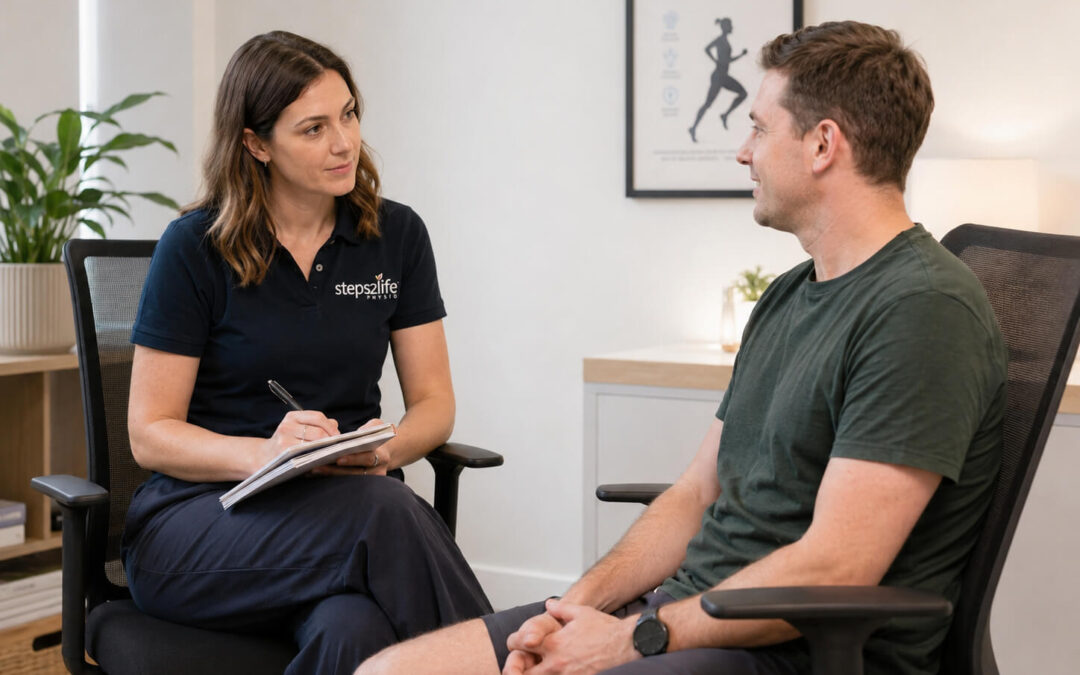
An occupational therapy home assessment looks at how a person manages everyday activities in their home, and how the physical environment affects safety and accessibility. Our occupational therapists assess living spaces and provide recommendations for modifications that improve safety, mobility, comfort and functionality.
This is sometimes called an occupational therapist home assessment, or an occupational therapy home assessment. It may be relevant when everyday tasks at home are becoming difficult, or when practical strategies, equipment, or home or work modifications need to be considered.
Our occupational therapy service also includes home and school modifications: practical environmental changes intended to make everyday spaces safer and easier to navigate. This page focuses on home and assistive technology assessments. For the wider occupational therapy service, including school-related support, see our occupational therapy page.
What is an assistive technology (AT) assessment?
Assistive technology (AT) can help people perform everyday tasks more safely, independently and effectively. An occupational therapy assistive technology assessment looks at a person’s individual needs, recommends suitable equipment, and provides supporting documentation where required.
People sometimes search for an NDIS assistive technology assessment in Sydney. Steps2Life offers these assessments through our Western Sydney clinics in Parramatta, Bankstown (Regents Park) and Penrith (Kingswood). Availability, appointment setting and funding suitability should be confirmed with our team. Examples of equipment that may be considered are listed below. The assessment itself is separate from any equipment that may later be funded.
Home and living assessments, including SIL and SDA
“Home and living” can mean different things. Some people are looking for an occupational therapist to assess the home environment, as described above. Others have been asked for evidence about NDIS home and living supports, such as Supported Independent Living (SIL) or Specialist Disability Accommodation (SDA).
Our occupational therapy team also offers Supported Independent Living (SIL) and Specialist Disability Accommodation (SDA) assessments. These evaluate support requirements for shared living or specialist housing arrangements. The documentation addresses functional needs, supervision levels and environmental considerations, in line with funding criteria.
A related assessment, the Independent Living and Daily Skills Assessment, looks at skills related to personal care, household tasks, budgeting, transport and community participation. The report documents support needs and practical strategies.
If you have been asked for a functional capacity assessment (FCA) as evidence for home and living supports, that is a related but different assessment. Requests for SIL, SDA or in-home support often need FCA evidence. When you enquire, our team can talk through which assessment may be appropriate. We cannot decide what the NDIA will fund.
Who might ask for one
You can enquire about a home, assistive technology or home and living assessment yourself. A family member, support coordinator or plan manager can also contact us on your behalf. Support coordinators, GPs and other professionals can send a referral to our intake team.
When you contact us, it helps to share the participant’s name, the assessment you have been asked for, a preferred clinic or setting, and any relevant plan or report details you are comfortable providing. You do not need to share more personal information than necessary to make an enquiry.
What happens during the assessment
Every assessment is tailored, but allied health assessments at Steps2Life generally follow the same steps.
- Initial discussion and background information. We begin by discussing relevant history, goals and background information. This may include medical history, educational information, previous reports and current support arrangements.
- Structured assessment activities. The occupational therapist conducts standardised and/or observational assessment activities relevant to the referral. These are selected based on age, presentation and the purpose of the assessment. An occupational therapy assessment may include observation, standardised tools, interviews and written reports where required. For a home assessment, the occupational therapist assesses the living space. For an assistive technology assessment, the focus is on individual needs and suitable equipment.
- Feedback and recommendations. Following the assessment, feedback is provided outlining key findings. Where appropriate, written reports and recommendations are prepared to support therapy planning or NDIS documentation requirements.
Assessments may take place in our clinics, at home, at school or by telehealth, where suitable. Home visits for these assessments are available from our Parramatta, Bankstown (Regents Park) and Penrith (Kingswood) clinics, usually within about 20 km of the clinic, with some exceptions. Please enquire so we can confirm whether a home visit is available in your area. Assessment length depends on individual needs.
Examples of home modifications and equipment that may be considered
Recommendations are individual. Examples listed on our occupational therapy page include the following.
Home modifications may include:
- Bathroom and kitchen modifications
- Access ramps and handrails
- Mobility and safety improvements
- Environmental accessibility solutions
Assistive technology options may include:
- Mobility equipment
- Seating and positioning supports
- Communication devices
- Daily living aids
- Sensory support equipment
These are examples of what may be considered, not a list of items that will be recommended or funded.
What’s in the report and how it can be used in NDIS planning
Where a written report is prepared, it can document findings and recommendations, and provide supporting documentation where required. Allied health reports at Steps2Life are written in plain English. They can be used to describe support needs and to inform NDIS planning or a plan review, and may also be used for school or other funding pathways where relevant.
We aim for a quick turnaround on reports. We cannot promise a specific timeframe.
We do not promise a particular plan outcome. A report can inform a planning discussion, but it does not guarantee funding approval. Funding decisions are made by the NDIA, not by Steps2Life.
How these assessments may be funded
If you have an NDIS plan, occupational therapy, including assessments, may be funded when the support relates to your disability and the goals in your plan, and meets NDIS rules. For most participants, occupational therapy is paid from the Capacity Building – Improved Daily Living part of the plan. The assessment itself usually comes from the therapy budget, while recommended assistive technology is usually funded from Capital supports. These are general patterns, not a promise that a particular budget will apply to you.
You do not need a GP referral to use NDIS funding for occupational therapy, but you do need occupational therapy funding in your plan. Steps2Life is a registered NDIS provider, so we can support participants whose plans are self-managed, plan-managed or NDIA-managed (agency-managed).
The NDIA — not the therapist or provider — decides what is funded. We cannot decide NDIS eligibility or promise that the NDIA will fund a particular support, including recommended equipment or home modifications.
If NDIS funding does not apply, other pathways may be available depending on the person, the service and eligibility rules. These may include Medicare, private health insurance, aged care programs, Department of Veterans’ Affairs arrangements, Department of Communities and Justice programs, workers compensation, or private payment. Assessment length and fees depend on individual needs. Fees, eligibility and rebates are confirmed individually after an enquiry or referral.
Our guides to NDIS allied health funding and whether occupational therapy is covered by the NDIS explain this in more detail. You can also see our funding options. Official information is on the NDIS website.
Frequently asked questions
Who can request a home or assistive technology assessment?
You can enquire yourself, or a family member, support coordinator or plan manager can contact us on your behalf. Support coordinators, GPs and other professionals can also send a referral.
Can the assessment take place at home?
Yes. Home visits for these assessments are available from our Parramatta, Bankstown (Regents Park) and Penrith (Kingswood) clinics, where suitable. We usually travel within about 20 km of the clinic, with some exceptions. Please enquire so we can confirm whether a home visit is available in your area. Assessments may also take place in the clinic, at school or by telehealth.
Is this the same as a functional capacity assessment?
No. A home or assistive technology assessment looks at the living environment and equipment needs. A functional capacity assessment is a broader look at how disability affects everyday life, and is often used as evidence for NDIS planning and for home and living supports such as SIL or SDA. When you enquire, we can talk through which assessment may be appropriate.
Does the assessment guarantee NDIS funding for equipment or home modifications?
No. A report can describe support needs and inform NDIS planning or a plan review, but it does not guarantee funding approval. The NDIA decides what is funded. We do not promise a particular plan outcome.
Do I need a referral?
You do not need a GP referral to use NDIS funding for occupational therapy, but you do need occupational therapy funding in your plan. You also do not need a referral to enquire or to book for NDIS, private health or private appointments. If you would like to claim a Medicare rebate, bring your GP Chronic Condition Management Plan and referral to your first session. Professionals can still send a referral on your behalf.
Which clinics can I enquire at?
Occupational therapy assessments, including home and assistive technology assessments, are available at our Parramatta clinic, our Bankstown clinic in Regents Park, and our Penrith clinic in Kingswood. Please ask us to confirm appointment times and whether a home visit, clinic, school or telehealth setting is the better fit.
How far do you travel for a home visit?
We usually travel within about 20 km of the clinic you enquire with — Parramatta, Bankstown (Regents Park) or Penrith (Kingswood) — with some exceptions. Please enquire to confirm whether your area is covered.
How long does the assessment take, and what does it cost?
Assessment length and fees depend on individual needs. We can talk through timing and fees when you enquire. We aim for a quick turnaround on reports, but we cannot promise a specific timeframe or fee until we have discussed your circumstances.
Key takeaways
- An occupational therapy home assessment looks at everyday activities in the home and at the living environment. An assistive technology assessment looks at equipment needs and provides supporting documentation where required.
- Recommendations may include bathroom and kitchen modifications, access ramps and handrails, and equipment such as mobility, seating, communication, daily living and sensory supports. These are examples, not a guaranteed list.
- SIL and SDA assessments are a related home and living assessment type offered by our occupational therapy team. A functional capacity assessment is related, but different.
- A written report can inform NDIS planning. It does not guarantee that the NDIA will fund recommended equipment or modifications.
- Home visits are available from all three clinics, usually within about 20 km of the clinic, with some exceptions. Please enquire to confirm your area. Assessment length and fees depend on individual needs, and we aim for a quick turnaround on reports.
- You can enquire at our clinics in Parramatta, Bankstown (Regents Park) and Penrith (Kingswood).
Home and assistive technology assessments in Parramatta, Bankstown (Regents Park) and Penrith (Kingswood)
Steps2Life occupational therapists complete these assessments at our Parramatta clinic (4A Dunlop Street, North Parramatta NSW 2151), our Bankstown clinic in Regents Park (50D Amy Street, Regents Park NSW 2143), and our Penrith clinic in Kingswood (22 Cox Avenue, Kingswood NSW 2747). Home visits are available from all three clinics, usually within about 20 km of the clinic, with some exceptions. Please enquire to confirm whether a home visit is available in your area.
Clinic hours are Monday to Friday 8:00am–6:30pm and Saturday 9:00am–4:00pm. The clinics are closed on Sunday and NSW public holidays. Parking is available at the front of the Parramatta and Kingswood clinics, and at the back of the Bankstown clinic. Steps2Life is a registered NDIS provider. For other allied health assessments, see our assessments page.
Ready to enquire? Call us on 1300 009 006, book online, make a referral, or contact our team. We aim to respond to enquiries within one business day. A free discovery call is a chance to talk through your needs, ask questions and understand your next steps.