Parenting is a journey filled with joy, challenges, and countless milestones. One of the most crucial aspects of raising a child is understanding their behavioural development—how they express emotions, interact with others, and navigate the world around them. By recognising these stages, you can support your child’s growth with patience, confidence, and the right guidance.
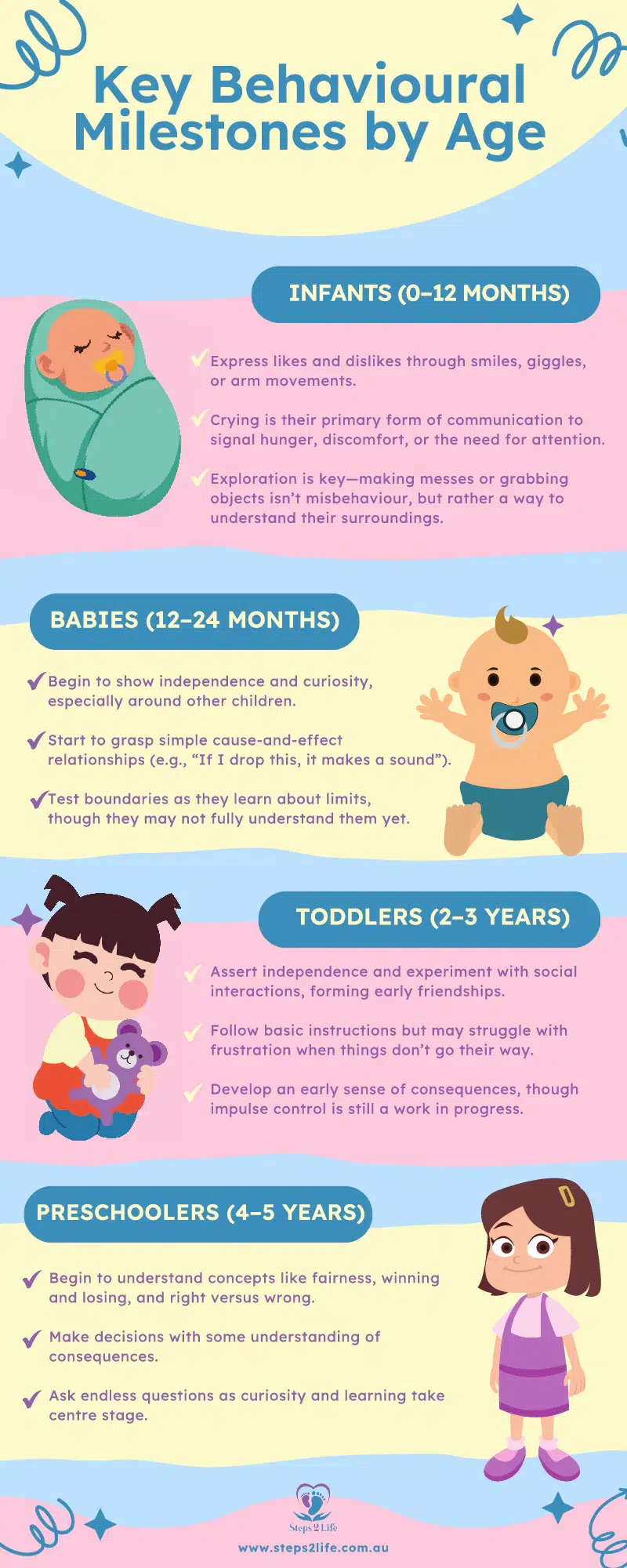
Key Behavioural Milestones by Age
Infants (0–12 months)
- Express likes and dislikes through smiles, giggles, or arm movements.
- Crying is their primary form of communication to signal hunger, discomfort, or the need for attention.
- Exploration is key—making messes or grabbing objects isn’t misbehaviour, but rather a way to understand their surroundings.
Babies (12–24 months)
- Begin to show independence and curiosity, especially around other children.
- Start to grasp simple cause-and-effect relationships (e.g., “If I drop this, it makes a sound”).
- Test boundaries as they learn about limits, though they may not fully understand them yet.
Toddlers (2–3 years)
- Assert independence and experiment with social interactions, forming early friendships.
- Follow basic instructions but may struggle with frustration when things don’t go their way.
- Develop an early sense of consequences, though impulse control is still a work in progress.
Preschoolers (4–5 years)
- Begin to understand concepts like fairness, winning and losing, and right versus wrong.
- Make decisions with some understanding of consequences.
- Ask endless questions as curiosity and learning take centre stage.
The Power of Behaviour Therapy in Development
Every child grows at their own pace, but some may face challenges in reaching key milestones. Behaviour therapy plays a vital role in helping children develop social skills, emotional regulation, and problem-solving abilities. Whether it’s addressing tantrums, difficulty with communication, or struggles with focus and interaction, therapy can empower children with the tools they need to thrive.
At Steps2Life, we provide tailored behaviour therapy programs that nurture a child’s unique strengths while addressing areas of improvement. Our experienced professionals work closely with families to create strategies that support both short-term success and long-term development.
Why Early Intervention is a Game-Changer
Identifying and addressing challenges early can have a profound impact on a child’s future. Behaviour therapy isn’t just about managing immediate concerns—it lays the foundation for resilience, confidence, and healthy relationships. Whether it’s helping a toddler navigate emotions or guiding a preschooler in making thoughtful choices, timely intervention makes all the difference.
Your child’s behavioural development is a journey, not a race. By understanding these milestones and seeking support when needed, you can equip your child with the skills they need to flourish at every stage of their growth.
Ready to support your child’s development? Let’s take the next step together. Contact Steps2Life today to learn how our expert team can help your child thrive!
Supporting behavioural development at home
Keeping a simple diary of when challenging behaviour happens, what came before it and what helped afterwards can reveal useful patterns. Sharing these notes with your child’s teacher or therapist means everyone can respond in a consistent way, which supports healthy behavioural development across home and school.
Behavioural development happens gradually, and every child moves through it at their own pace. Simple, consistent routines, clear expectations and plenty of praise for positive behaviour can make a big difference. Naming emotions, offering choices and modelling calm responses help children learn how to manage big feelings.
If you have concerns about your child’s behavioural development, such as frequent meltdowns, difficulty following instructions or challenges with friendships, it can help to talk with a professional. Our team can assess what is happening and work with your family on practical strategies, including positive behaviour support where appropriate.